



3.5-Day Birding Tour in Yucatán, Mexico – Cobá, Xocén, Uxuxubí, Progreso and Mérida (March 2026 Trip Report)
Birding in the Yucatán Peninsula: 190 Species in 3.5 Days
This 3.5-day birding tour in the Yucatán Peninsula, Mexico, was designed for Maurice and Kirsten, visitors from the Netherlands who combined a wedding trip with a customized birdwatching experience.
Over just a few days, we explored some of the top birding locations in the region, including Uxuxubí al Natural, Cobá Archaeological Site, Xocén Birding Trail, Misnebalam Road, and the Progreso coast. The trip produced an impressive 190 bird species, with highlights such as ant swarms, Ocellated Turkey, Mexican Sheartail, and Northern Potoo.
Day 1 – Uxuxubí al Natural (Jungle Birding in Yucatán)
The tour started in Cancún. The plan was to pick them up upon arrival and head straight to Uxuxubí al Natural for some afternoon birding, so I left Mérida early to meet them around 3:00 PM. Maurice and Kirsten did arrive on time, but slow customs and an even slower highway — combined with bad weather — complicated the logistics.
Eventually, we made it to the reserve and started picking up our first birds as soon as we hit the dirt road. We began with a couple of Tropical Mockingbirds, followed by a very wet Black-headed Trogon, and then a small flock of four Collared Aracaris perched on top of a Cecropia tree. The excitement was definitely building!
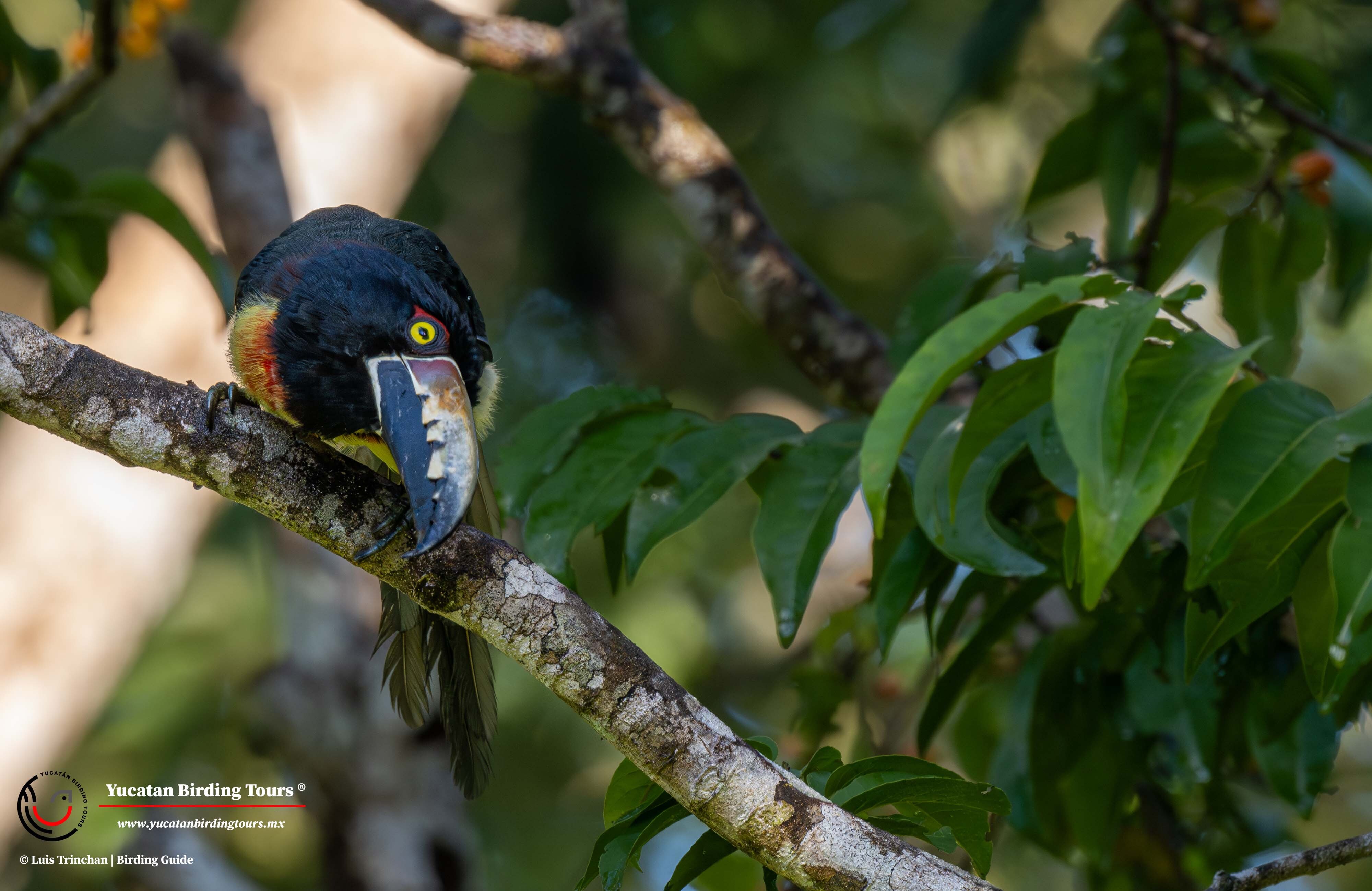
Collared Aracari (Pteroglossus torquatus).
Once inside the reserve, we met our local guide, Axel Vásquez, and began walking the trails of Uxuxubí. The forest felt alive despite the rain, and we managed to see some great birds, including Plain Chachalaca, Red-billed Pigeon, Lesser Nighthawk, Bare-throated Tiger-Heron, Boat-billed Heron, Little Blue Heron, Tricolored Heron, Green Heron, Ferruginous Pygmy-Owl, Golden-fronted Woodpecker, White-fronted Amazon, Yucatán Jay, Melodious Blackbird, Hooded Warbler, Black-headed Saltator, and Cinnamon-bellied Saltator.
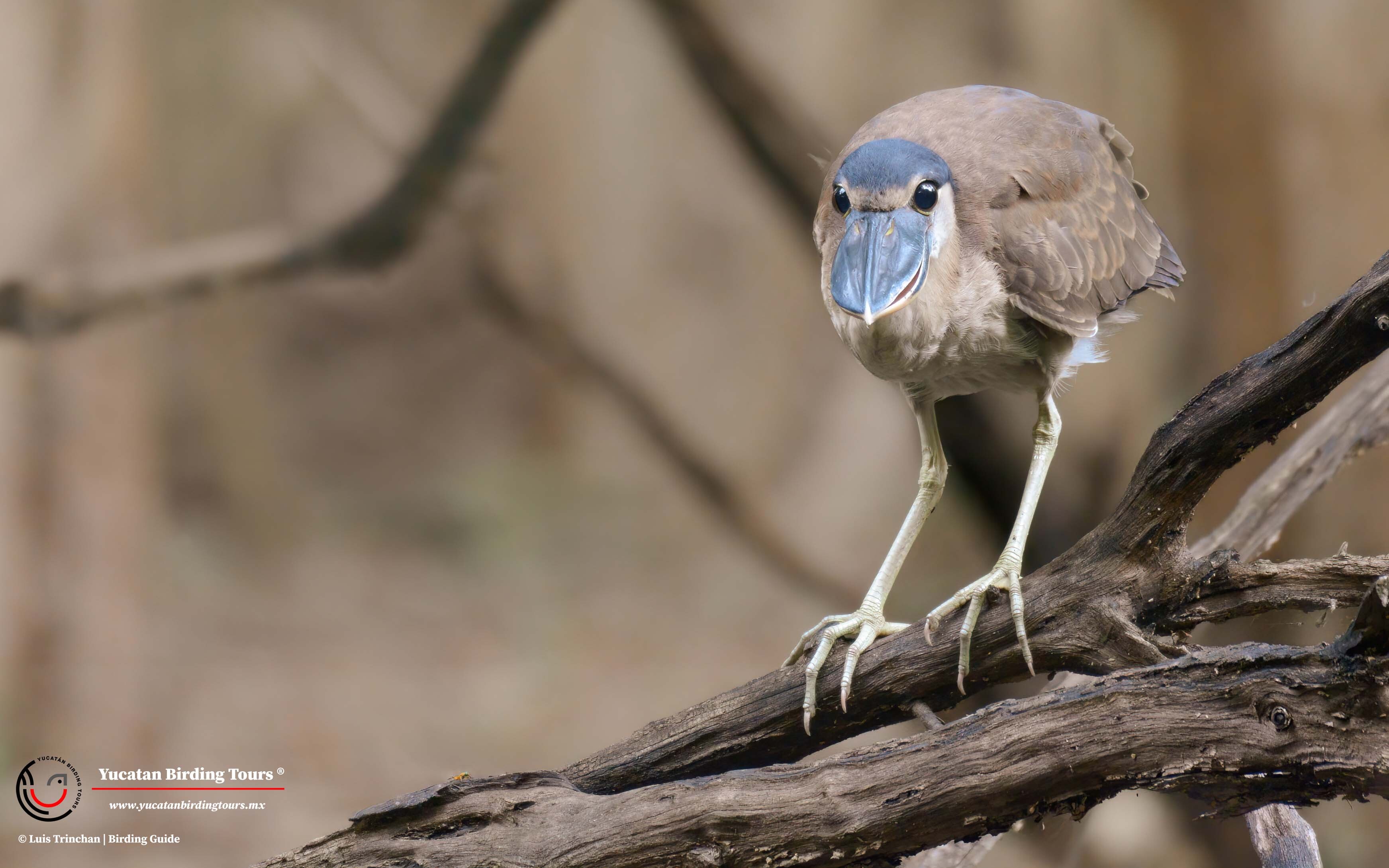
Boat-billed Heron (Cochlearius cochlearius).
After birding, we went out for tacos and got ready for the next morning in the field.
Day 2 – Cobá Ruins & Xocén Birding Trail (Ant Swarms & Tropical Specialties)
For our second morning, the plan was to visit the Cobá Archaeological Site. We left Akumal very early and arrived at sunrise to bird the large pond just outside the ruins before opening hours.
This pond is known for being one of the best spots for Ruddy Crake in the Yucatán Peninsula. As expected, this was one of the first birds we saw that morning — although technically, the first one was a Eurasian Collared Dove that decided to poop inside our car the moment we opened the door.
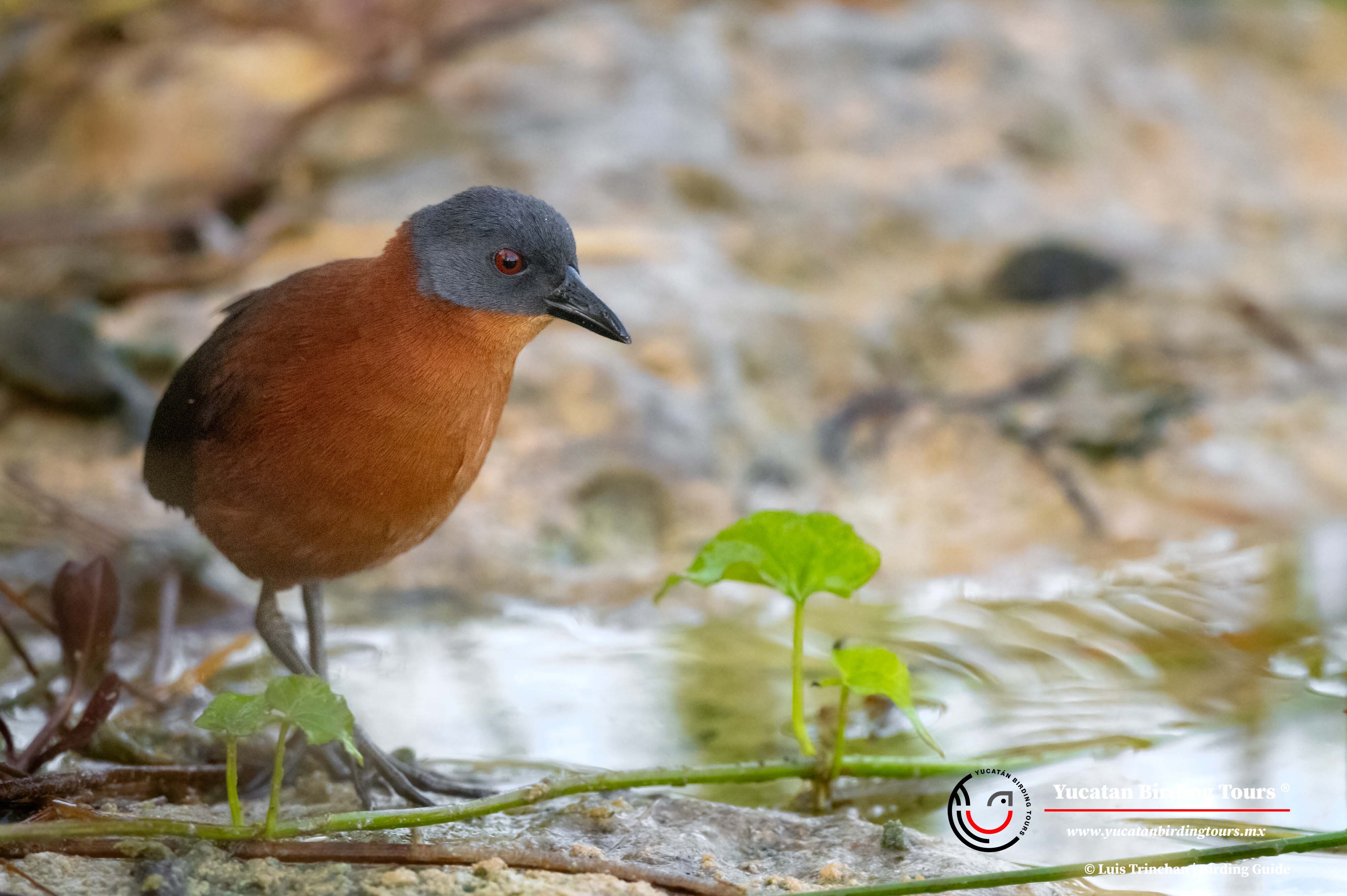
Ruddy Crake (Laterallus ruber).
We spent about an hour walking around the pond and recorded 45+ species, including Ruddy Ground Dove, Groove-billed Ani, Vaux’s Swift, Cinnamon Hummingbird, Purple Gallinule, Limpkin, Northern Jacana, Pied-billed Grebe, Anhinga, Neotropic Cormorant, Bare-throated Tiger-Heron, Osprey, Ferruginous Pygmy-Owl, Turquoise-browed Motmot, Belted Kingfisher, Keel-billed Toucan, Golden-fronted Woodpecker, White-fronted Amazon, Brown Jay, Yellow-throated Euphonia, Orchard Oriole, Hooded Oriole, Altamira Oriole, Bronzed Cowbird, Northern Waterthrush, Common Yellowthroat, Northern Parula, Magnolia Warbler, Northern Yellow Warbler, Yellow-throated Warbler, Indigo Bunting, and Morelet’s Seedeater.
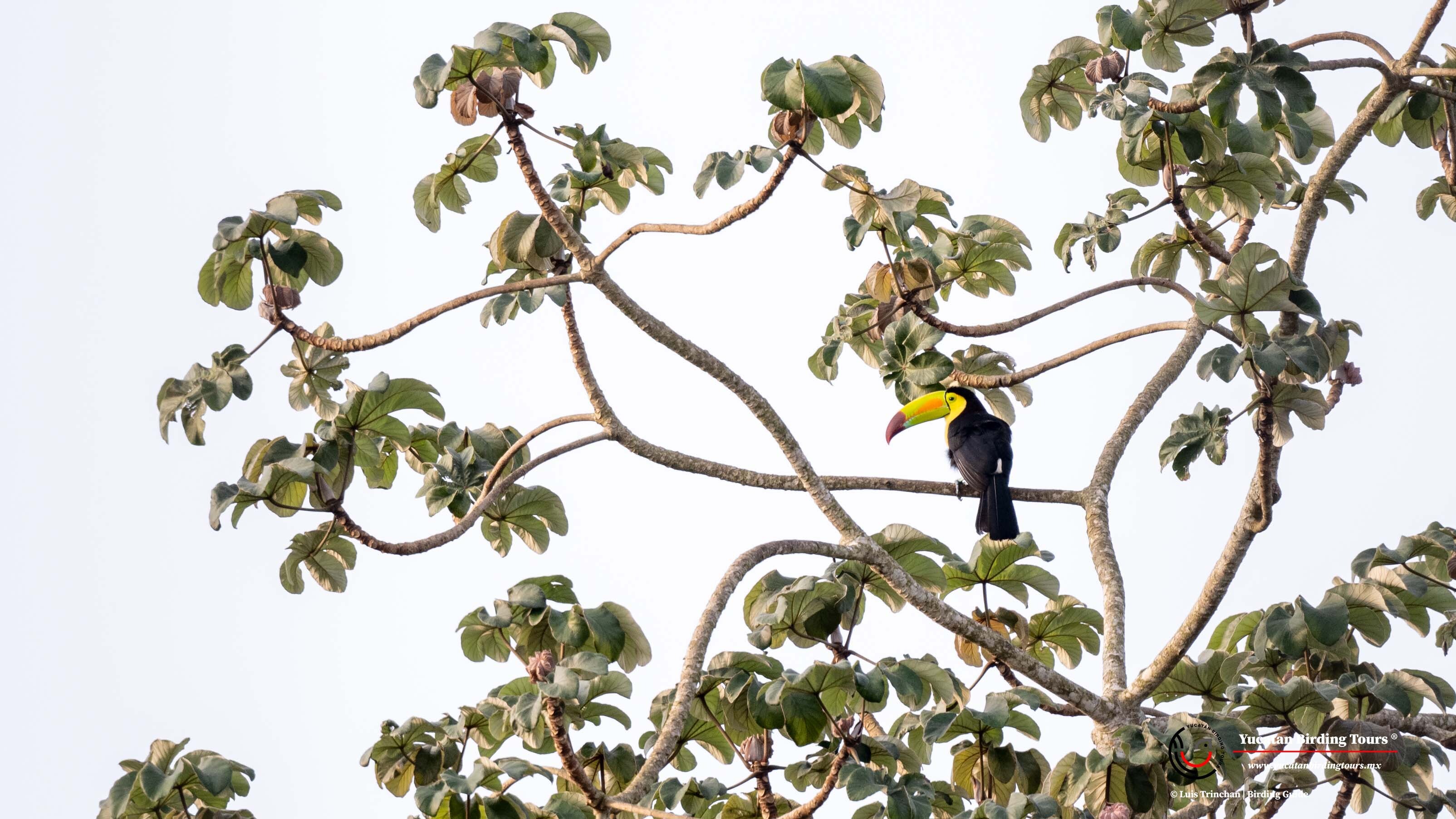
Keel-billed Toucan (Ramphastos sulfuratus).
At around 8:20 AM, we entered the archaeological site and started birding the trails. Activity was good for about an hour while exploring a quieter section of the ruins — smaller structures that most visitors skip in favor of the more photogenic areas. Here we found Yellow-backed Orioles, Olivaceous Woodcreepers, a pair of Pale-billed Woodpeckers, Red-throated Ant-Tanagers, our first Ocellated Turkeys, and a very confiding Kentucky Warbler.
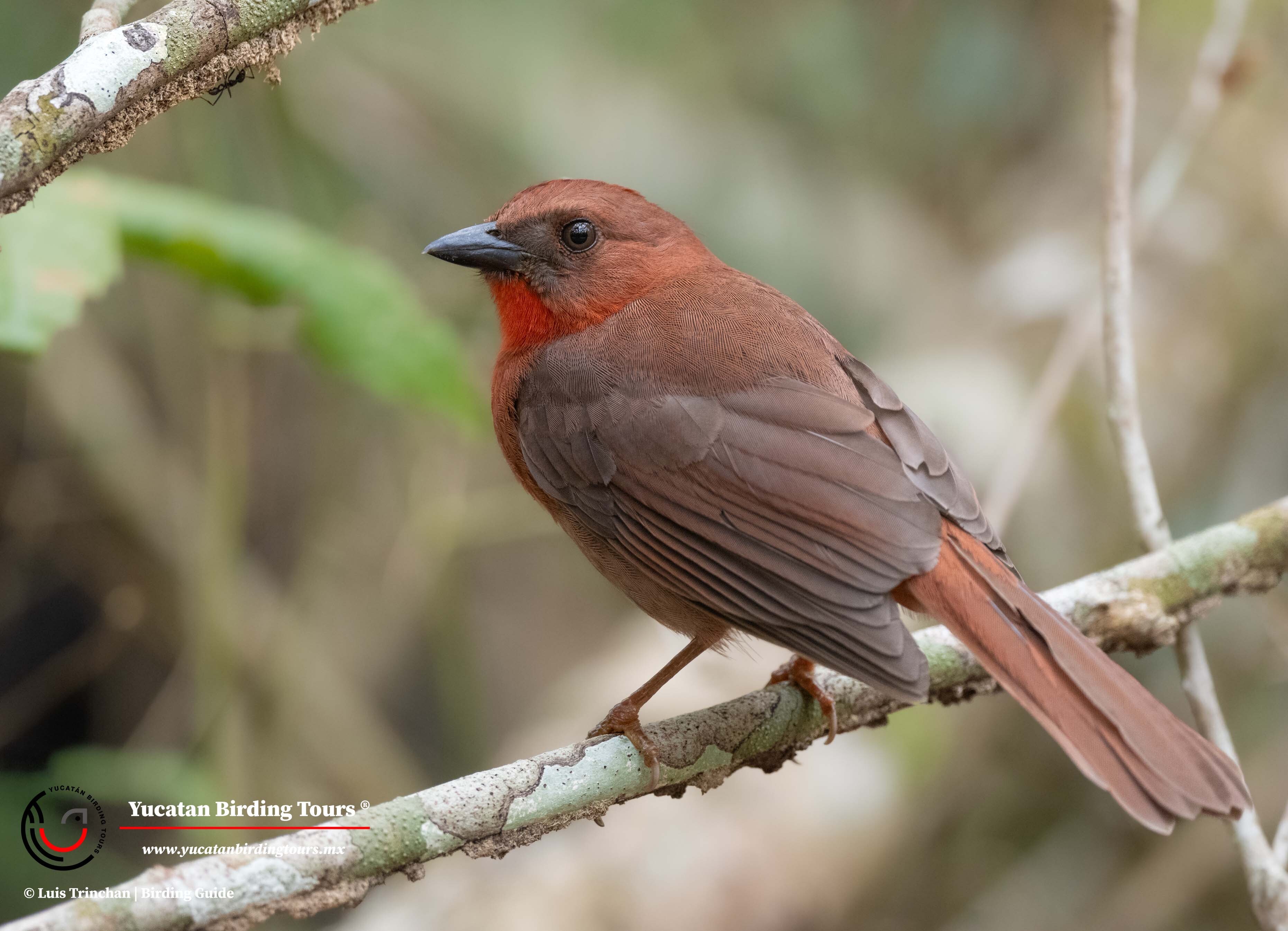
Red-throated Ant-Tanager (Driophlox fuscicauda).
At that point, it already felt like a great morning, but things were about to get much better when a birder from Sweden mentioned he had just seen what he described as “a bird party” about 100 meters from where we were standing. I immediately told Maurice and Kirsten that this sounded like an ant swarm — something we had talked about earlier.
If you're not familiar with ant swarms, these involve army ants — predatory, nomadic insects that can form massive raiding columns of up to 200,000 individuals, consuming nearly everything in their path. Opportunistic birds follow these swarms to catch escaping arthropods, reptiles, amphibians, and other small creatures. Finding one is every birder’s dream.
Birds become completely focused on feeding, often allowing incredibly close views. Species that are usually difficult, such as woodcreepers and wrens, may perch in the open just meters away, frozen in place as they watch the swarm for their next opportunity.
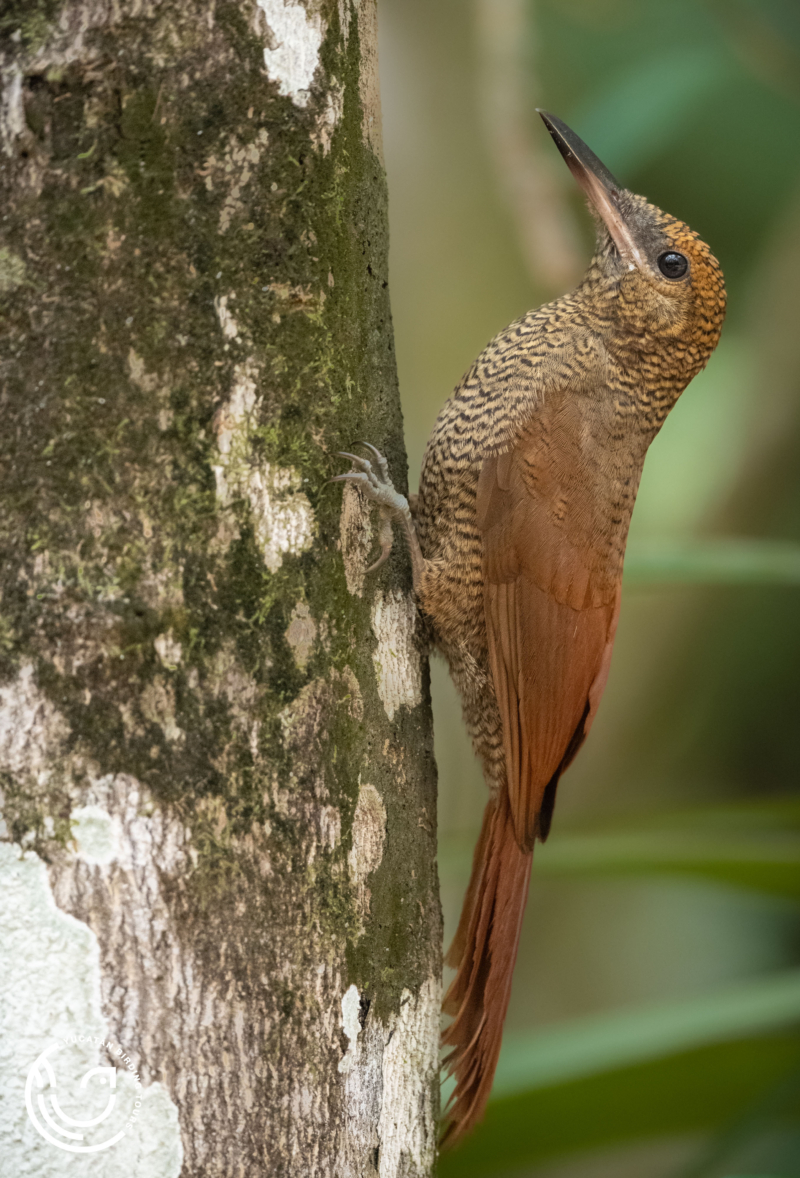
I honestly don’t even know where to start with what we saw there. One highlight was a Yucatan Jay catching an Ochraceous Bark Scorpion and eating it right in front of us. We also had outstanding views of four woodcreeper species: Northern-barred, Ivory-billed, Ruddy, and Tawny-winged Woodcreepers.
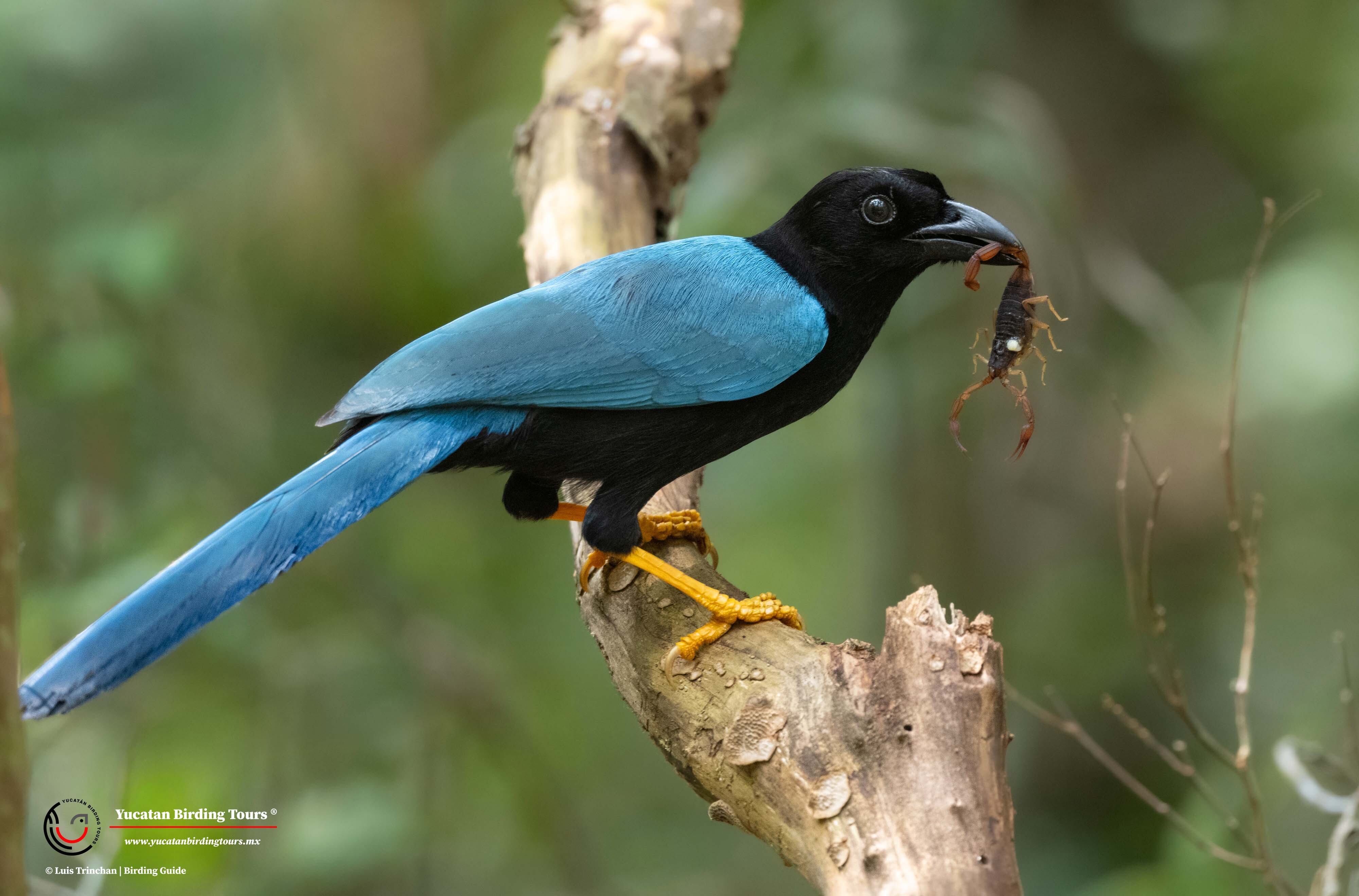
Yucatan Jay (Cyanocorax yucatanicus) with an Ochraceous Bark Scorpion (Centruroides ochraceus).
Other species at the swarm included Social Flycatcher, Spot-breasted Wren, Kentucky Warbler, Hooded Warbler, Magnolia Warbler, Red-throated Ant-Tanager, Rose-throated Tanager, and Gray-headed Tanager.
Moments like this are exactly why people travel to the tropics in search of birds.
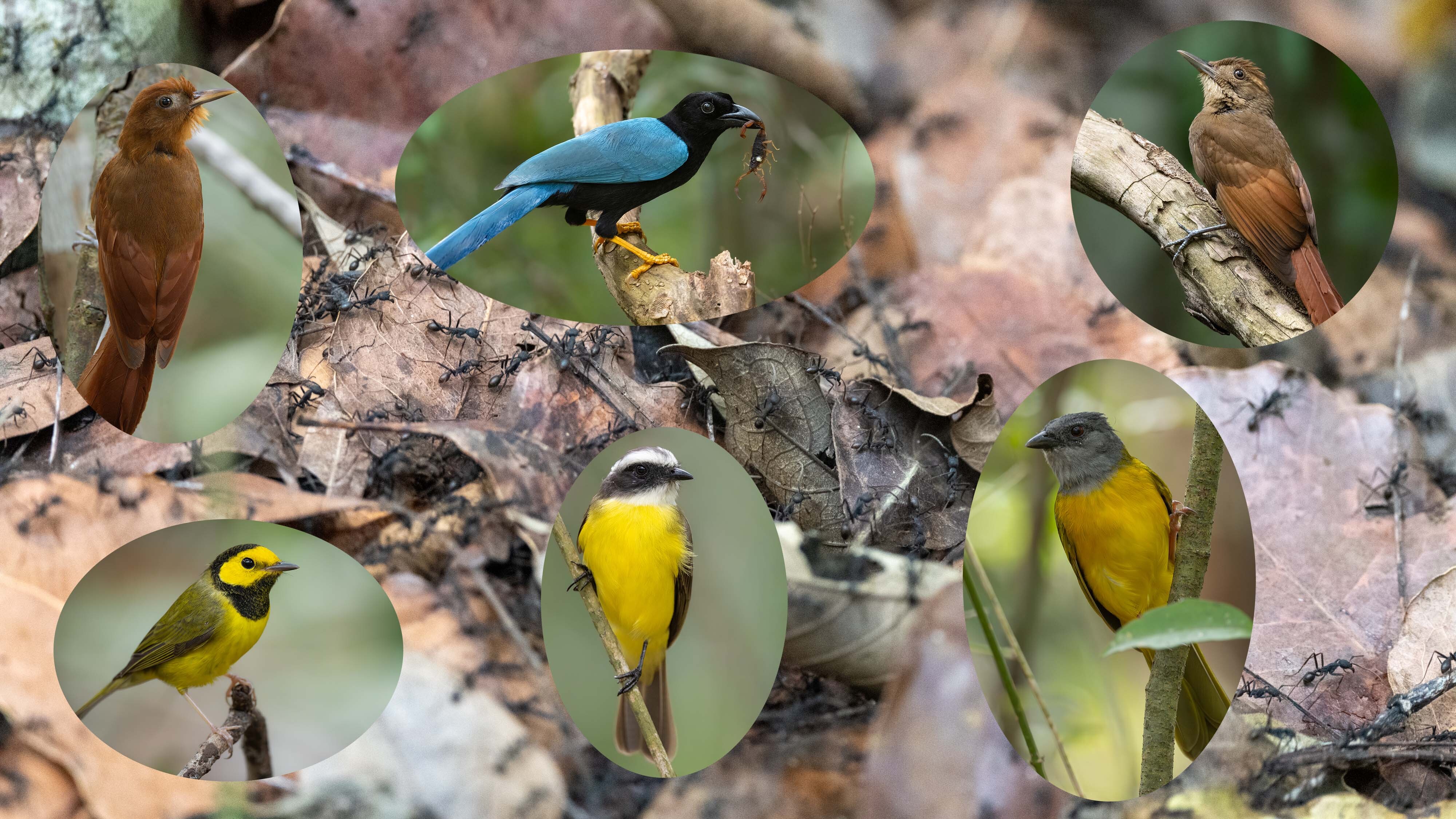
Composition of some photos taken at the ant-swarm that morning, from up-left to down-right: Ruddy Woodcreeper, Yucatan Jay, Tawny-winged Woodcreeper, Hooded Warbler, Social Flycatcher and Gray-headed Tanager.
It would be hard to include all the photos from this experience, so here’s the eBird checklist:
https://ebird.org/checklist/S310827339
After such an exciting morning, it was time for breakfast. While eating, a Yellow-winged Tanager perched on a power line right above the restaurant — a nice addition to the trip list.
We then left Cobá and headed to Valladolid, checked into our hotel, rested during the hottest part of the day, and later drove to Xocén for more birding.
As we were arriving in town, we spotted a Bat Falcon perched on a telephone tower.
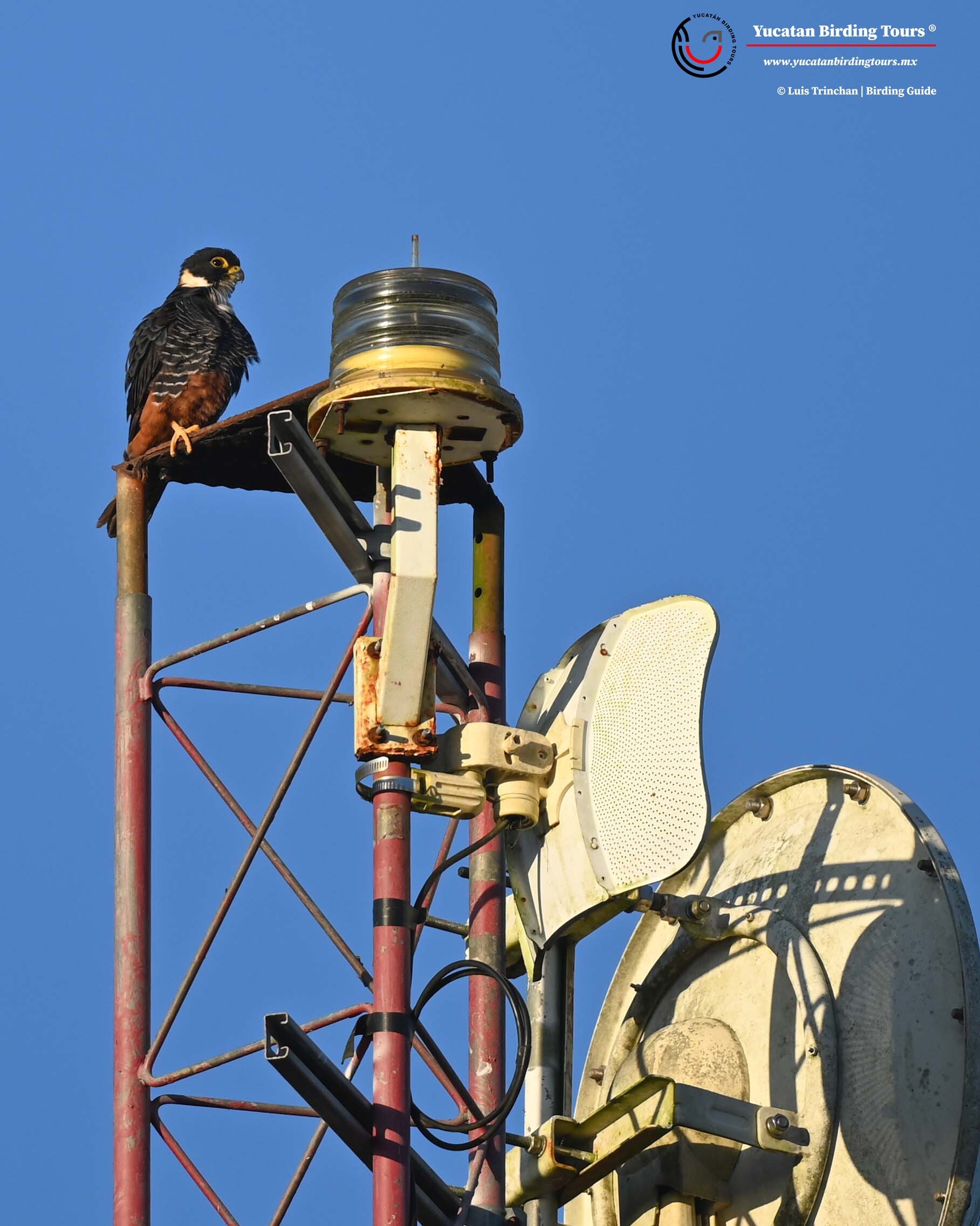
Bat Falcon (Falco rufigularis).
At the Xocén Birding Trail, we parked and met with other birders getting ready to head out, just like us. Not long after starting the trail, we encountered another ant swarm. Although this one was less active than the morning swarm, but still productive, with Groove-billed Ani, Ivory-billed Woodcreeper, and Red-throated Ant-Tanagers.
Along the trail, we also recorded White-tipped Dove, Canivet’s Emerald, Buff-bellied Hummingbird, Turkey Vulture, Turquoise-browed Motmot, Yucatán Woodpecker, Rose-throated Becard, Least Flycatcher, Dusky-capped Flycatcher, Boat-billed Flycatcher, Couch’s Kingbird, Rufous-browed Peppershrike, Green Jay, Yucatán Jay, Orange Oriole, and heard-only Thicket Tinamous.
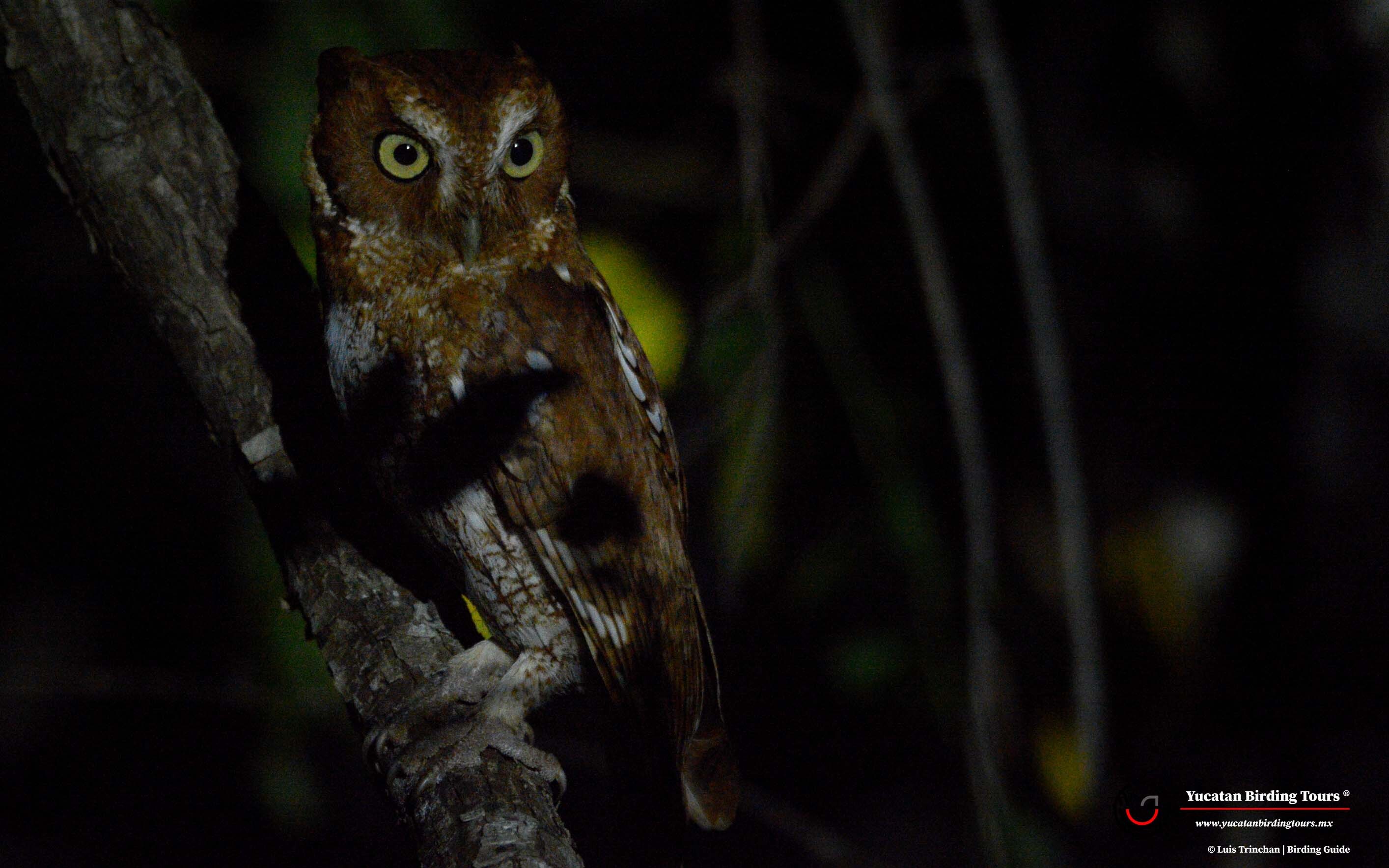
Middle American Screech-Owl (Megascops guatemalae).
As night fell, we regrouped with the other birders to look for nightbirds. We had great views of Middle American Screech-Owl, along with heard-only Pheasant Cuckoo, Common Pauraque, and Yucatán Poorwill.
Day 3 – Xocén Forest Birding & Progreso Coast
On our third day, we returned to the Xocén Birding Trail, this time in the morning to take advantage of peak bird activity. We hiked for about 5 kilometers over roughly four hours through semideciduous forest and recorded 75+ species, including Plain Chachalaca, Common Squirrel Cuckoo, Ruby-throated Hummingbird, Roadside Hawk, Gartered _Violaceous Trogon, Turquoise-browed Motmot, Yucatán Woodpecker, Lineated Woodpecker, Yellow-lored Amazon, Olive-throated Parakeet, Masked Tityra, Rose-throated Becard, Yellow-olive Flatbill, Northern Beardless-Tyrannulet, Northern Tropical Pewee, Yucatán Flycatcher, Boat-billed Flycatcher, Mangrove Vireo, Yellow-throated Vireo, White-browed Gnatcatcher, Carolina Wren, White-bellied Wren, Scrub Euphonia, Yellow-billed Cacique, Black-cowled Oriole, Orange Oriole, Altamira Oriole, Melodious Blackbird, Ovenbird, Black-and-white Warbler, American Redstart, Black-throated Green Warbler, Indigo Bunting, Yellow-faced Grassquit, and Black-headed Saltator.
After a successful morning and a good lunch, we drove to Mérida, took a short break at our B&B, and then headed out again — this time to the coast near Progreso.
We arrived around 4:00 PM at one of my favorite birding locations near Mérida, where I regularly take visitors on half-day tours. In just over two hours of birding, we recorded 57 species, including Blue-winged Teal, American Avocet, Black-bellied Plover, Spotted Sandpiper, Lesser Yellowlegs, Willet, Least Sandpiper, Laughing Gull, Lesser Black-backed Gull, American Flamingo, Double-crested Cormorant, Neotropic Cormorant, White Ibis, Little Blue Heron, Tricolored Heron, Reddish Egret, Snowy Egret, Green Heron, Western Cattle Egret, Great Egret, Brown Pelican, Lesser Yellow-headed Vulture, American Kestrel, Olive-throated Parakeet, Eastern Phoebe, Great Kiskadee, Tropical Kingbird, Tree Swallow, Barn Swallow, Yucatán Wren, Gray Catbird, Red-winged Blackbird, and Mangrove Yellow Warbler.
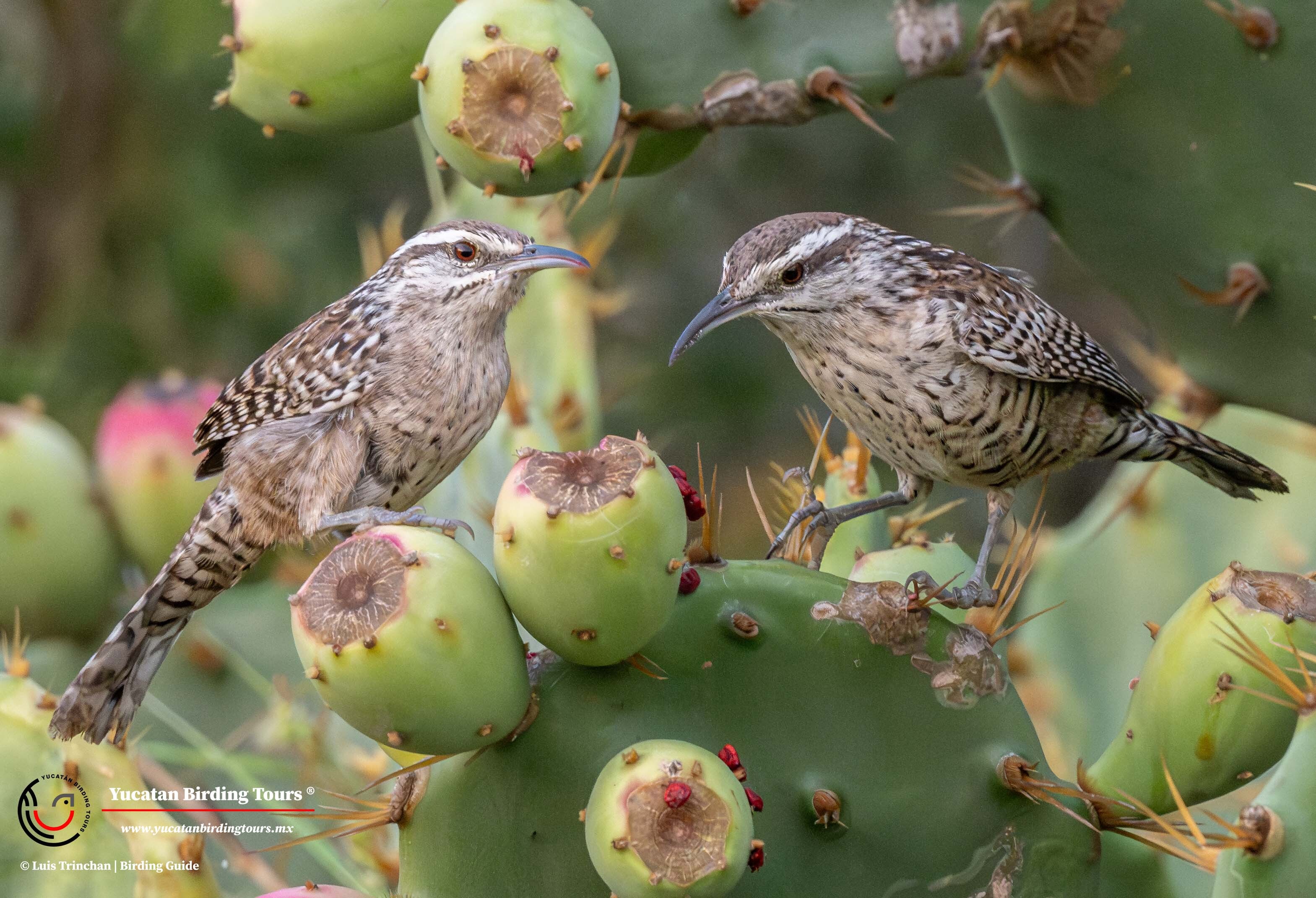
Yucatan Wren (Campylorhynchus yucatanicus).
I dropped Maurice and Kirsten at their hotel that night, where they were meeting friends for dinner, and headed back home to rest before our final morning together.
Day 4 – Misnebalam Road & Coastal Birding near Mérida
For our last day, we visited the Misnebalam Road, a “must” for birders visiting Mérida. This old road, lined with agricultural fields and dry forest, is home to 250+ species and is one of the best places to find Black-throated Bobwhite. A place I’ve visited over 350 times, and one that still brings excitement on every visit
We birded for about two hours (we could have stayed longer, but we wanted to reach the coast before the heat picked up). We recorded 60+ species, including Black-throated Bobwhite, Common Ground Dove, Cooper’s Hawk (a rare bird in the Peninsula), Crane Hawk, Roadside Hawk, American Kestrel, Barred Antshrike, Brown-crested Flycatcher, White-eyed Vireo, Northern Rough-winged Swallow, Olive Sparrow, Orange Oriole, Gray-crowned Yellowthroat, Northern Cardinal, Blue Bunting, Blue-black Grassquit, and Cinnamon-bellied Saltator.
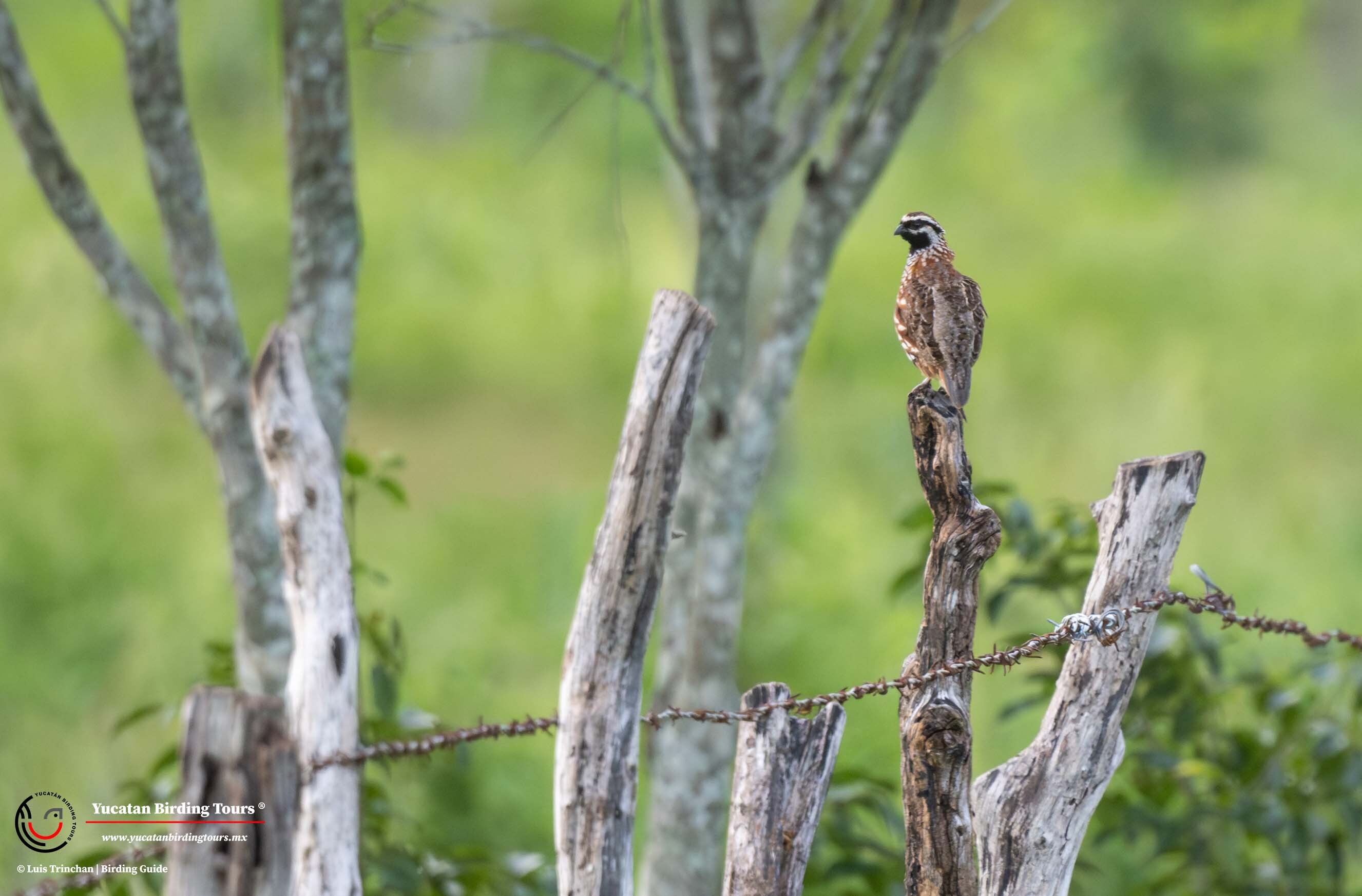
Black-throated Bobwhite (Colinus nigrogularis).
While driving along the coast, Maurice spotted a bird with a forked tail soaring on the other side of the road. As soon as I saw it, I yelled, “That’s a Swallow-tailed Kite!” I stopped, turned around, and parked safely so we could get out and watch. There were five individuals — a great sighting, as they are fairly uncommon in the area.
We then reached our next birding location, Chuburná, where we targeted Mexican Sheartail and Yucatán Gnatcatcher. Fortunately, in less than an hour we had both species, along with other great birds such as Mangrove Cuckoo, American Oystercatcher, and Least Tern.
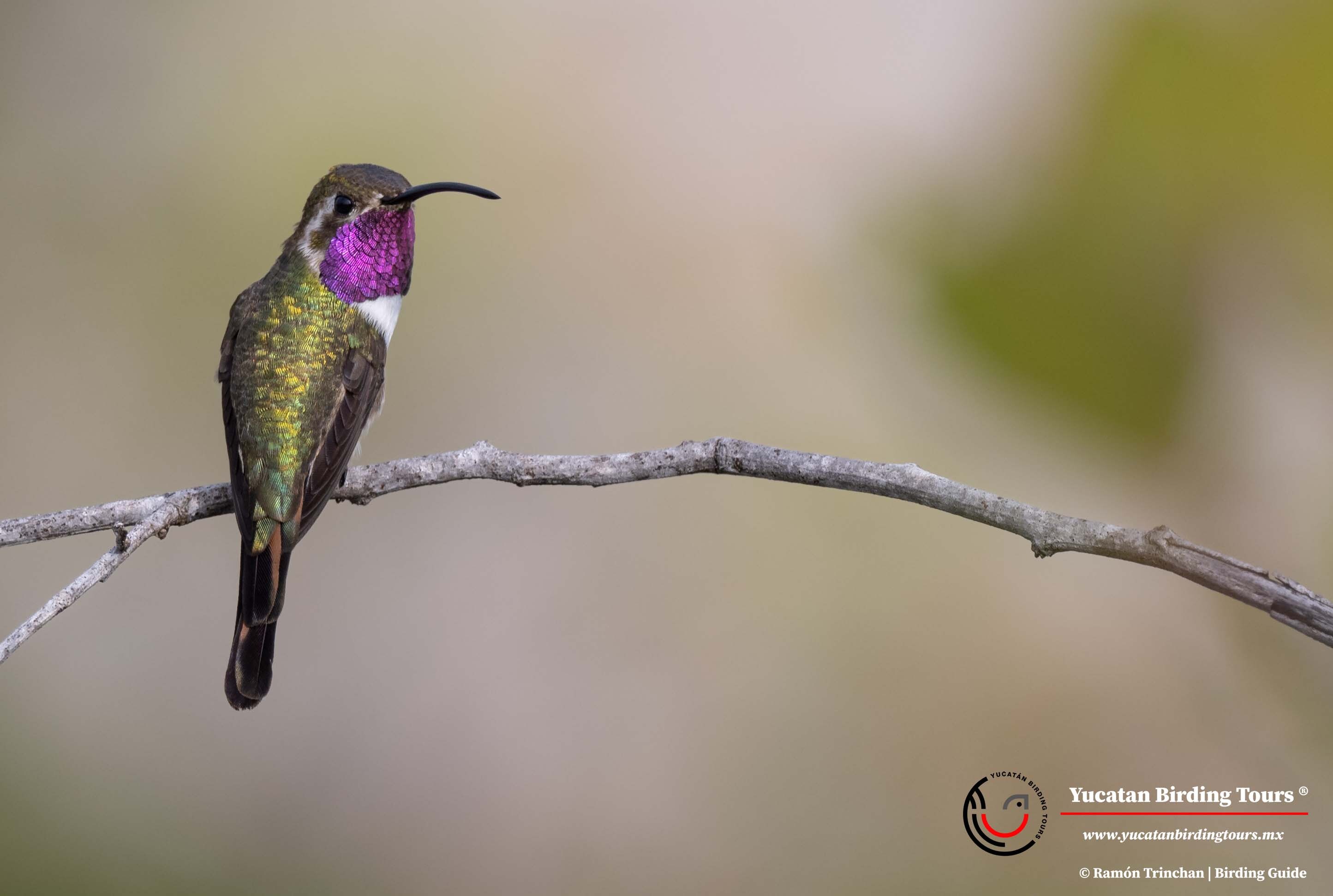
Mexican Sheartail (Doricha eliza).
On the way back to Mérida, we also picked up Black Skimmers, Caspian Terns, and more flamingos.
Our final stop of the trip was an ecological park within the city, where a Northern Potoo has become well known for its reliable roost. In addition to the Potoo, we recorded the final species of the trip, including Blue-winged Teal, Cinnamon Hummingbird, Common Gallinule, Northern Jacana, Solitary Sandpiper, Neotropic Cormorant, Yucatán Woodpecker, Yucatán Jay, Gray Catbird, Orchard Oriole, Summer Tanager, and Indigo Bunting.
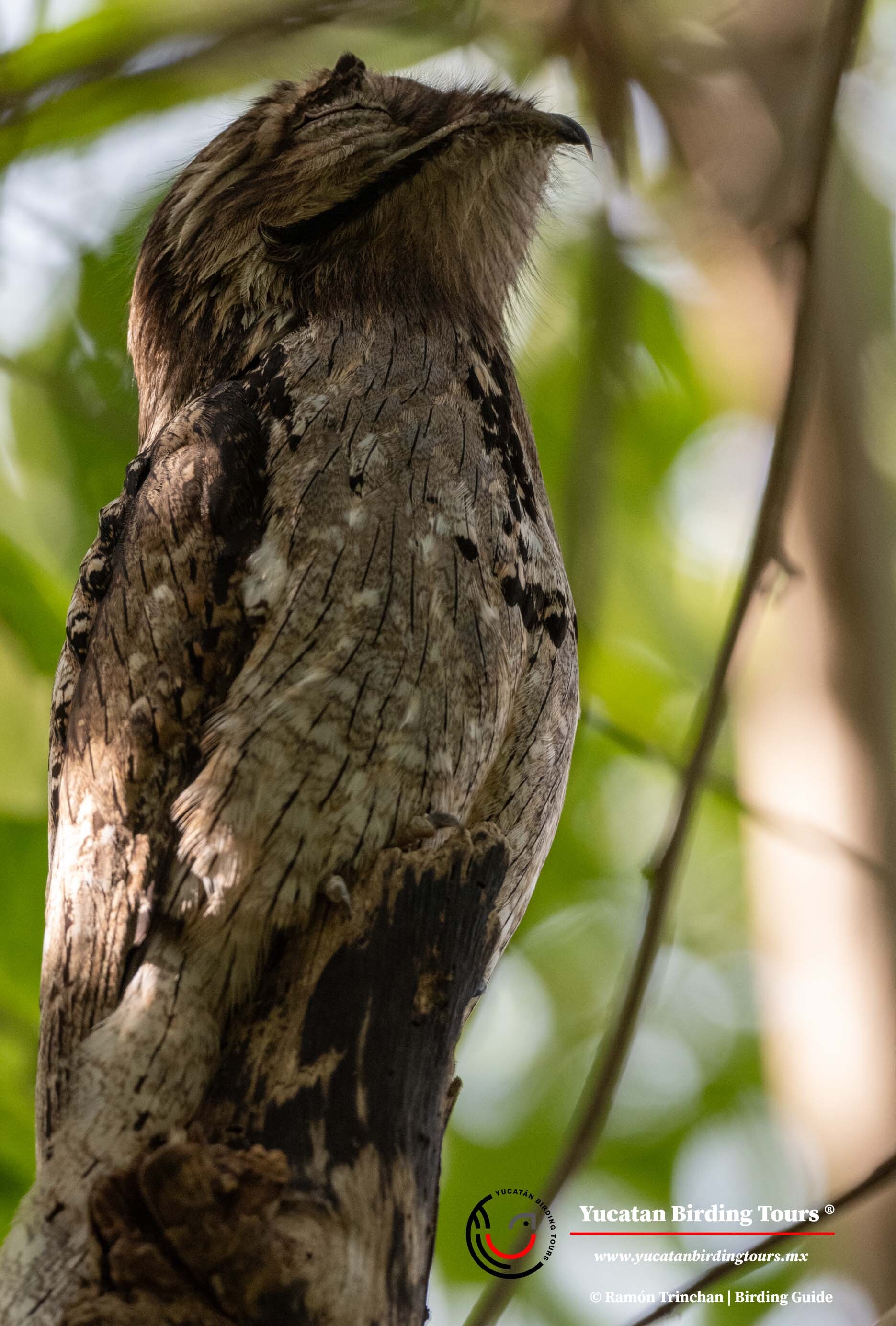
Northern Potoo (Nyctibius jamacensis).
This marked the end of our trip, with a total of 190 species recorded over 3.5 days of birding.
Thank you, Maurice and Kirsten, for the great times — your company was a 10 out of 10!
Written by Luis Trinchan Guerra
Plan Your Birding Tour in Yucatán
If you're interested in birding in the Yucatán Peninsula, we offer customized birdwatching tours tailored to your target species, schedule, and experience level.
Whether you're looking for endemic species, migratory birds, or unique experiences, the Yucatán is one of the most rewarding birding destinations in Mexico.